

Quick answer
The most productive locations for dolphin sightings in Cornwall are Porthgwarra, Gwennap Head, Pendeen Watch, St Ives Bay, Newquay's Towan Head, Looe Bay, and the Lizard Peninsula's coastal path. Early morning visits between 06:00 and 09:00 offer calmer seas and higher cetacean activity close to shore. Bottlenose and common dolphins appear year-round, with peak sightings from May through October when baitfish shoals concentrate near headlands and tidal races.
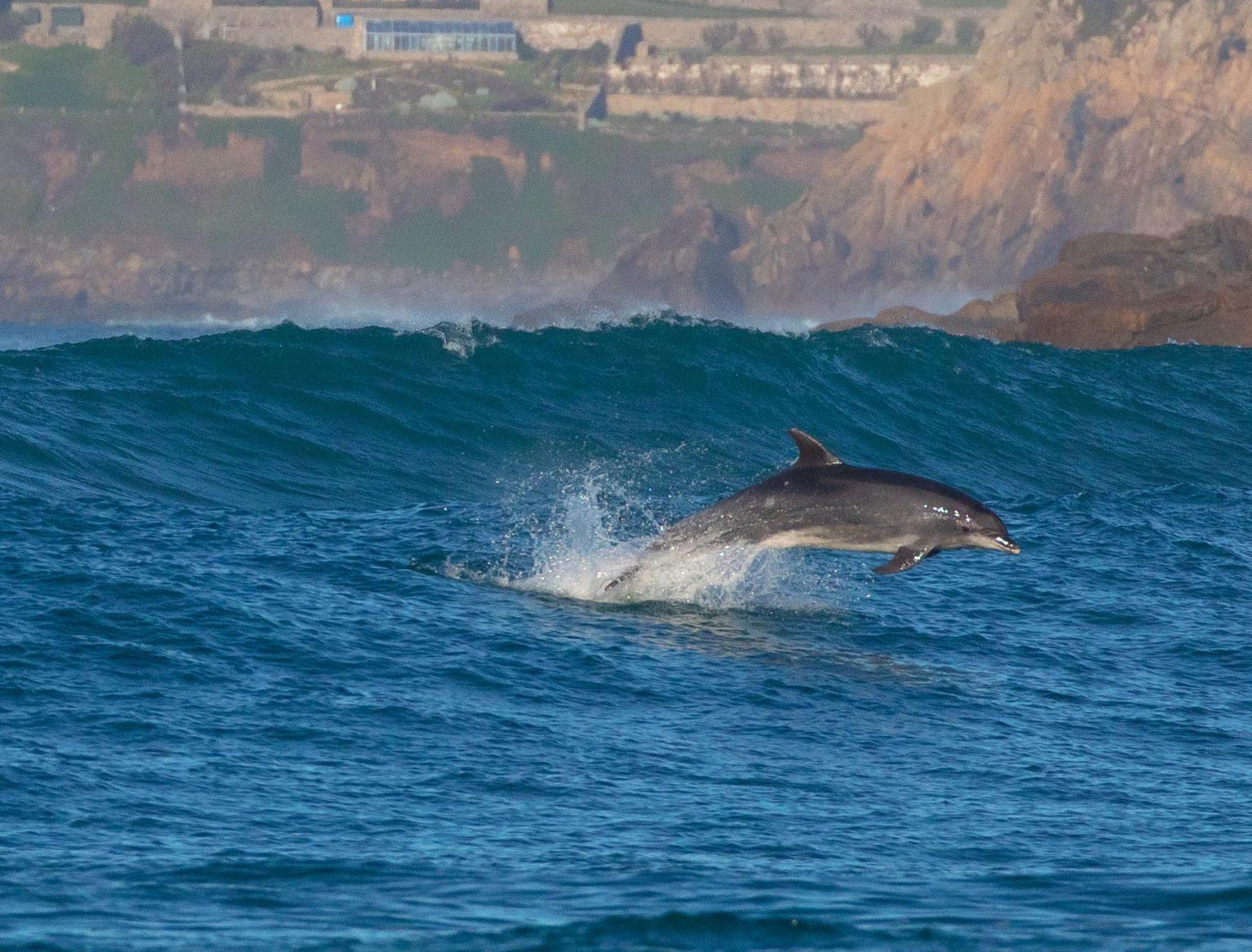
Bottlenose dolphins in Cornish waters can weigh 300 kilograms and hunt within 200 metres of the shore when mackerel and bass schools hug the coastline. These are not transient visitors—resident pods patrol feeding grounds along the north and south coasts, returning to the same tidal upwellings and reef edges season after season. Where to see dolphins in Cornwall depends on understanding their foraging behaviour. Headlands that thrust into tidal streams create turbulence zones where nutrients rise and baitfish gather. Porthgwarra on the far western tip and Gwennap Head just south form a pinch point for cetaceans moving between the Celtic Sea and the English Channel. Pendeen Watch on the north coast offers 180-degree visibility over open water where common dolphins often travel in groups of twenty or more. St Ives Bay's sweeping arc and the sheltered waters of Looe Bay on the south coast produce consistent sightings during summer and autumn, particularly when seabird activity signals feeding frenzies below the surface. The Lizard Peninsula's coastal path between Kynance Cove and Lizard Point delivers elevated vantage points above deep water channels favoured by hunting pods. Newquay's Towan Head combines accessibility with reliable summer encounters, while the offshore reefs near Padstow and the Camel Estuary attract dolphins tracking salmon and sea trout runs. Visibility correlates directly with sea state—wind speeds below 10 knots and a light swell reveal dorsal fins and surfacing blows at distances exceeding 500 metres. Cornwall Wildlife Trust maintains observation stations and citizen science programmes that log sightings and migration patterns. Public coastal paths remain open year-round, with no access fees. Binoculars rated 8x42 or 10x50 resolve detail at range, and polarised lenses cut glare on bright days. Patience and position matter more than equipment. Dolphins surface unpredictably, but watching bird behaviour—gannets diving, gulls wheeling—often telegraphs their approach. The coastline itself is free to explore, and the best dolphin watching in Cornwall starts with choosing a headland where tidal flow and underwater topography align, then committing the time to watch the water work.
“Headlands that thrust into tidal streams create turbulence zones where nutrients rise and baitfish gather—exactly where dolphins hunt.”
The Best Time and Hours for Where to See Dolphins in Cornwall
The best arrival window for dolphin spotting is 06:00–09:00, as early morning conditions typically provide calmer seas and higher visibility near the shore. Planning your visit around these hours increases the likelihood of observing cetaceans in their natural environment.
Summer (June–August)
High visitor density15–20°C, generally stable conditions. Increased boat traffic can disperse pods, making early mornings critical.
Autumn (September–November)
Lower visitor density12–17°C, frequent wind and swell. Often productive for spotting pods following migratory fish stocks.
Winter (December–February)
Minimal visitor density7–10°C, unpredictable and rough seas. Sightings are less frequent but possible during brief windows of calm weather.
Spring (March–May)
Moderate visitor density9–14°C, variable conditions. This period marks the start of more regular sightings as sea temperatures begin to rise.
Verdict: For the highest probability of success, target the 06:00–09:00 arrival window during the quieter months of April or October.
Hotspots Where to See Dolphins in Cornwall
The Cornish Coast provides diverse coastal habitats where cetaceans are frequently observed. These locations offer vantage points for observing dolphin activity in their natural environment.

Land's End
This westernmost point features high granite cliffs that overlook deep water channels where pods often travel.
Use binoculars to scan the horizon for breaking water surface activity.

St Ives Bay
The sheltered waters of this bay are a common site for common and bottlenose dolphins.
Position yourself on the headland to observe movement within the bay.

The Lizard Peninsula
As the most southerly point of mainland Britain, these waters serve as a migratory corridor for marine life.
Watch for dolphins navigating the currents near the jagged coastline.

Mount's Bay
Located between the Lizard and Land's End, this bay offers extensive views of the Atlantic.
Look for groups feeding near the sandbanks during rising tides.
Access Hours for Where to See Dolphins in Cornwall
Public coastal paths and beaches along the Cornish Coast provide open access throughout the week. These locations remain accessible to the public at all times.
| Monday | 00:00–23:59 | |
|---|---|---|
| Tuesday | 00:00–23:59 | |
| Wednesday | 00:00–23:59 | |
| Thursday | 00:00–23:59 | |
| Friday | 00:00–23:59 | |
| Saturday | 00:00–23:59 | |
| Sunday | 00:00–23:59 |
Pricing for Where to See Dolphins in Cornwall
Access to the Cornish Coast for wildlife observation is provided via public coastal paths and beaches. There are no entrance fees required to access these natural observation points.
A typical adult pays 0 GBP to access the Cornish Coast, as all observation areas are located on public land.
Wildlife Etiquette When Choosing Where to See Dolphins in Cornwall
Dolphins are protected under UK law, and disturbance can result in prosecution. Respectful observation ensures these cetaceans continue to thrive in Cornish waters and remain visible from shore.
Do
- Maintain at least 100 metres distance if on a vessel
- Keep noise levels low and movements calm
- Observe from clifftops and coastal paths when possible
- Report injured or stranded cetaceans to British Divers Marine Life Rescue
- Stay parallel to dolphins' direction of travel, never head-on
Don't
- Chase, encircle or attempt to touch dolphins
- Use drones within 150 metres of marine mammals
- Feed or throw objects toward cetaceans
- Rev engines or make sudden speed changes near pods
- Swim out to intercept dolphins or block their path
Preparation Checklist for Where to See Dolphins in Cornwall
Essential items and preparation steps for dolphin watching along the Cornish coast.
-
Pack binoculars (8x42 or higher magnification) — Dolphins surface briefly and may be far from shore, requiring magnification to observe behaviour and identify species.
-
Wear waterproof and windproof layers — Coastal weather changes rapidly, with wind chill and sea spray common even on calm days.
-
Bring a field guide or ID chart — Cornwall's waters host multiple cetacean species, and identification requires knowledge of dorsal fin shape and surfacing patterns.
-
Charge your camera and phone fully — Battery life drains faster in cold, and opportunities for documentation are fleeting when dolphins appear.
-
Apply reef-safe sunscreen before arrival — Reflection off water intensifies UV exposure, and early morning visits still require sun protection on exposed headlands.
-
Download tide tables for your chosen location — Dolphins often follow baitfish movements tied to tidal flows, making tide awareness useful for positioning.
Check availability
Frequently asked questions about where to see dolphins in cornwall
Everything you need to know about where to see dolphins in cornwall