
Quick answer
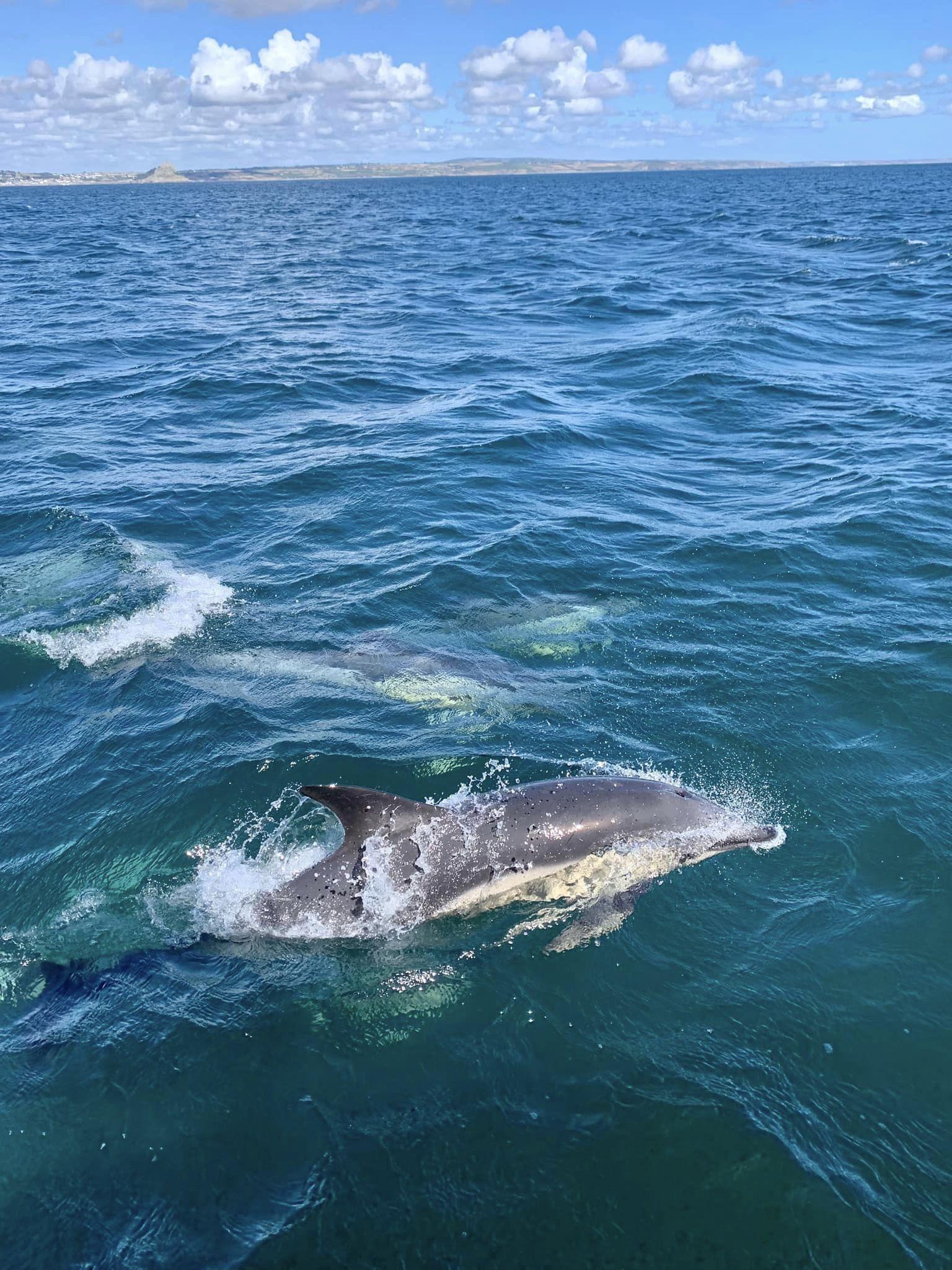
Dolphin sightings Cornwall peak between May and September, when common dolphins and harbour porpoises feed in coastal waters. Bottlenose dolphins appear year-round but concentrate near estuaries during spring and autumn. The Lizard Peninsula, Porthgwarra, and Godrevy Head consistently yield the highest number of confirmed sightings, with early morning offering the calmest conditions and clearest visibility from shore-based vantage points.
More than 2,800 cetacean sightings were logged along the Cornish coastline in 2025, with three species accounting for the majority of confirmed reports. Common dolphins travel in pods of ten to fifty individuals and favour the offshore shelf edge, though feeding events frequently bring them within two hundred metres of headlands. Harbour porpoises, the smallest cetacean in British waters, surface briefly and move alone or in pairs; their low profile makes them easy to miss unless the sea is flat. Bottlenose dolphins, larger and more acrobatic, concentrate around river mouths and shallow bays where prey fish gather. Sightings cluster geographically. The Lizard Peninsula's exposed position intercepts southbound pods during autumn migration, while Porthgwarra's deep water close to shore creates year-round feeding grounds. Godrevy Head and Cape Cornwall offer elevated viewpoints where observers can scan several kilometres of surface in a single sweep. Recent reports from the Cornwall Wildlife Trust confirm that harbour porpoises now appear in Mount's Bay throughout the summer months, a range extension first noted in 2023. Timing governs success. Dolphin sightings Cornwall improve sharply in May as water temperatures climb and baitfish shoals move inshore. Common dolphins follow mackerel runs through June and July, often breaching and bow-riding in groups visible from clifftops. August marks the harbour porpoise peak, with mothers and calves recorded off the north coast between Newquay and Tintagel. By October, sightings decline as pods disperse into deeper Atlantic waters, though bottlenose dolphins remain present near the Fal and Camel estuaries through winter. Land-based spotting requires patience and the right conditions. Glassy seas, low swell, and offshore winds eliminate surface clutter and reveal the subtle dorsal fins of porpoises or the splashes of breaching dolphins. Binoculars extend your effective range, and sustained observation—twenty minutes or more—raises the likelihood of catching movement. The Cornwall Seal Group and Cornwall Wildlife Trust maintain live sighting logs that highlight recent activity and help direct effort toward productive headlands during peak months.
“More than 2,800 cetacean sightings were logged along the Cornish coastline in 2025, with three species accounting for the majority of confirmed reports.”
The Best Times for Dolphin Sightings Cornwall
The best arrival window is 09:00–11:00, as early morning provides the calmest seas and highest visibility for shore-based sightings. Coastal conditions remain the primary factor in successful spotting regardless of the season.
Summer (June–August)
High volume of visitors15°C–20°C; generally calm waters allow for frequent sightings. Increased boat traffic can occasionally influence dolphin proximity to the shore
Shoulder Season (April–May, September)
Moderate numbers12°C–16°C; stable conditions often result in consistent marine activity. These months are effective for spotting common and bottlenose dolphins
Winter (November–March)
Low foot traffic7°C–11°C; rougher sea states make visibility more challenging. Sightings occur but require more patience due to weather fluctuations
Weekday mornings
Minimal—; early arrivals offer optimal light and calmer surface conditions for scanning the water. This period reduces noise disturbance and increases visibility.
Verdict: For the highest probability of sightings, plan your arrival between 09:00–11:00 during the shoulder months of April or September.
Operating Hours for Dolphin Sightings Cornwall
The Cornish Coast is open daily for land-based dolphin spotting. Visitors may access the coastline during the following hours.
| Monday | 09:00–18:00 | |
|---|---|---|
| Tuesday | 09:00–18:00 | |
| Wednesday | 09:00–18:00 | |
| Thursday | 09:00–18:00 | |
| Friday | 09:00–18:00 | |
| Saturday | 09:00–18:00 | |
| Sunday | 09:00–18:00 |
Admission Fees for Dolphin Sightings Cornwall
Admission costs for dolphin sightings on the Cornish Coast depend entirely on your chosen method of observation. Land-based spotting from public access points requires no payment, whereas excursions conducted by private boat operators involve individual service fees.
A typical adult pays 0 GBP for shore-based viewing, while costs for boat trips fluctuate based on the specific private operator selected.
Common Species and Facts About Dolphin Sightings Cornwall
Cornwall's nutrient-rich coastal waters provide an ideal habitat for several dolphin species, which can be observed throughout the year. Understanding the distinct behaviors of these marine mammals helps observers identify different species during their coastal visits.
The Short-beaked Common Dolphin is frequently identified by a distinctive tan or yellowish-tan hourglass pattern on its flanks. They are highly social, often seen in large groups, and are known for their energetic and acrobatic displays.
Bottlenose Dolphin resident pod
England's only resident population of Bottlenose Dolphins consists of approximately 40 individuals. These dolphins are often identified by unique notches and markings on their dorsal fins, which act like human fingerprints.
Social solitary dolphins
Occasionally, individual Bottlenose Dolphins—sometimes termed 'social solitary'—may exhibit unusual behavior by interacting closely with boats and swimmers. Experts advise caution during these encounters to ensure both public safety and the animal's welfare.
Risso's Dolphin appearance
Risso's Dolphins are often found in deeper waters and are distinguished by a unique, scarred appearance. These white markings result from interactions with other dolphins and the cephalopods they hunt.
Harbour Porpoises as companions
While technically a separate species, the Harbour Porpoise is often seen alongside dolphins in Cornish waters. They are the smallest cetacean found here and are known for their shy, elusive behavior compared to larger dolphins.
Individual identification methods
Responsible Conduct During Dolphin Sightings Cornwall
Observing dolphins in their natural habitat requires care to avoid disturbance. Following marine wildlife guidelines protects these animals and ensures sustainable sightings for future visitors.
Do
- Keep at least 100 metres distance from dolphins when viewing from boats
- Report sightings to local conservation groups to support population monitoring
- Stay quiet and move calmly to avoid startling marine wildlife
- Use binoculars for closer views without approaching the animals
- Follow skipper instructions on certified wildlife-watching boat trips
- Take litter home to prevent marine pollution
Don't
- Don't attempt to touch, feed or swim with wild dolphins
- Don't chase dolphins or position boats in their path
- Don't use flash photography which can disorient marine mammals
- Don't discard food waste or plastics into the sea
- Don't operate personal watercraft near dolphin pods
- Don't obstruct dolphins travelling with calves
Check availability
Frequently Asked Questions About Dolphin Sightings Cornwall
Everything you need to know about dolphin sightings cornwall